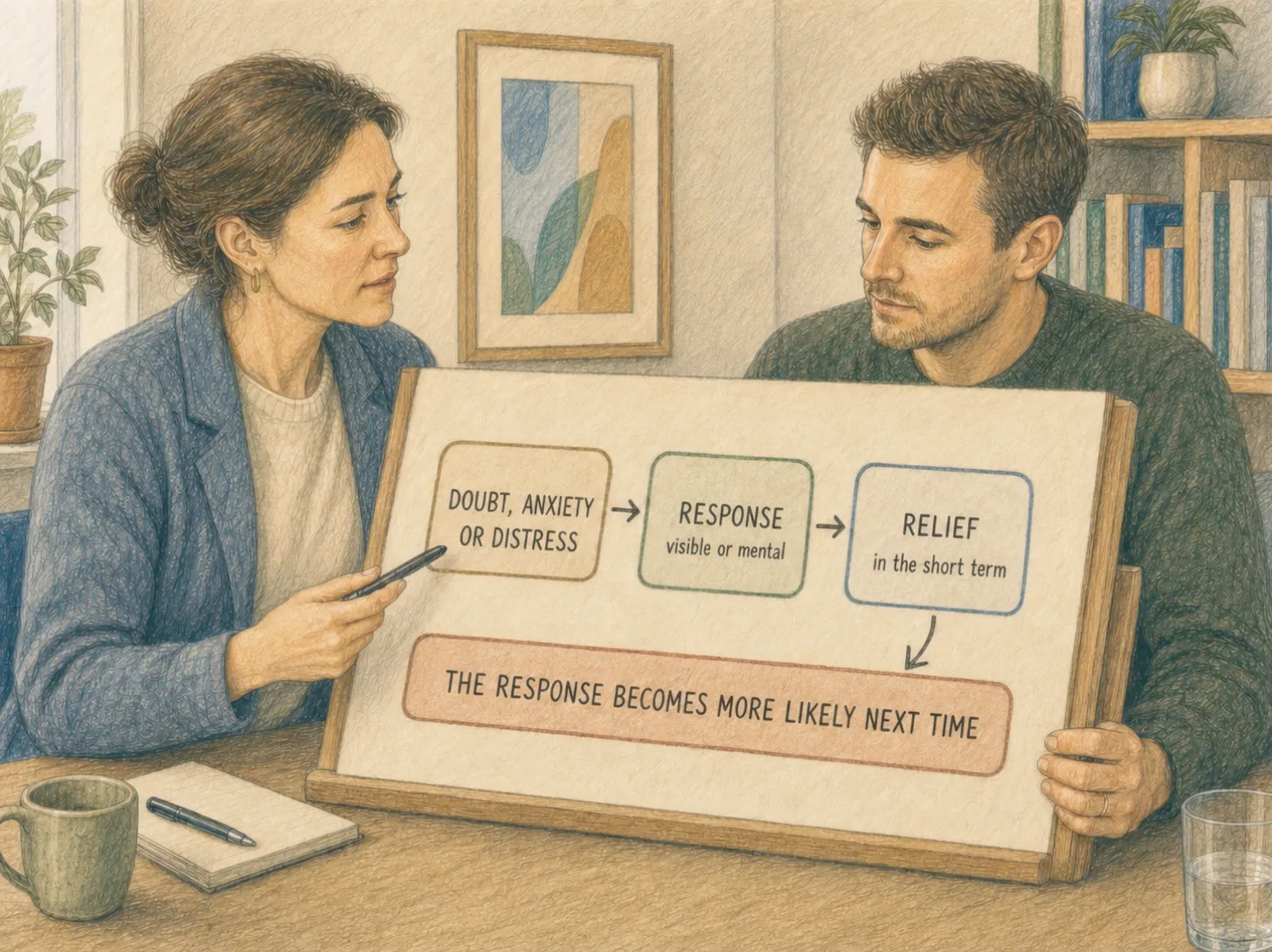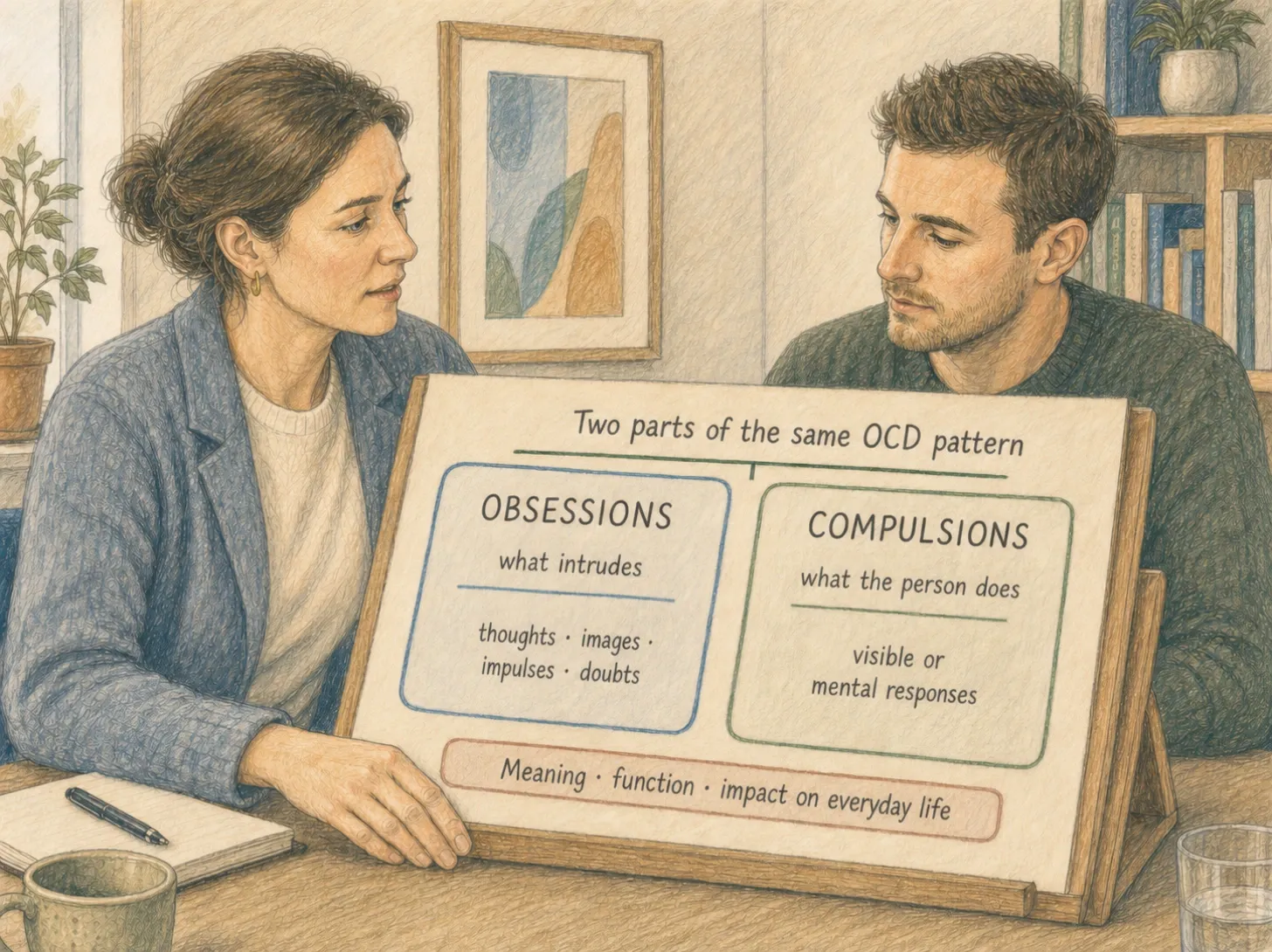

5-column thought record
Explore the 5-column thought record, with an example and printable PDF, and learn why it should be used with care in OCD.
Explore OCD, its different forms and the approaches used in treatment.

Knowledge communicator
When a thought feels like an accusation, analysis, checking and the search for certainty can become an inner trial. There is a way back to the life already unfolding around you.
Psychologist licensed in Denmark · PhD
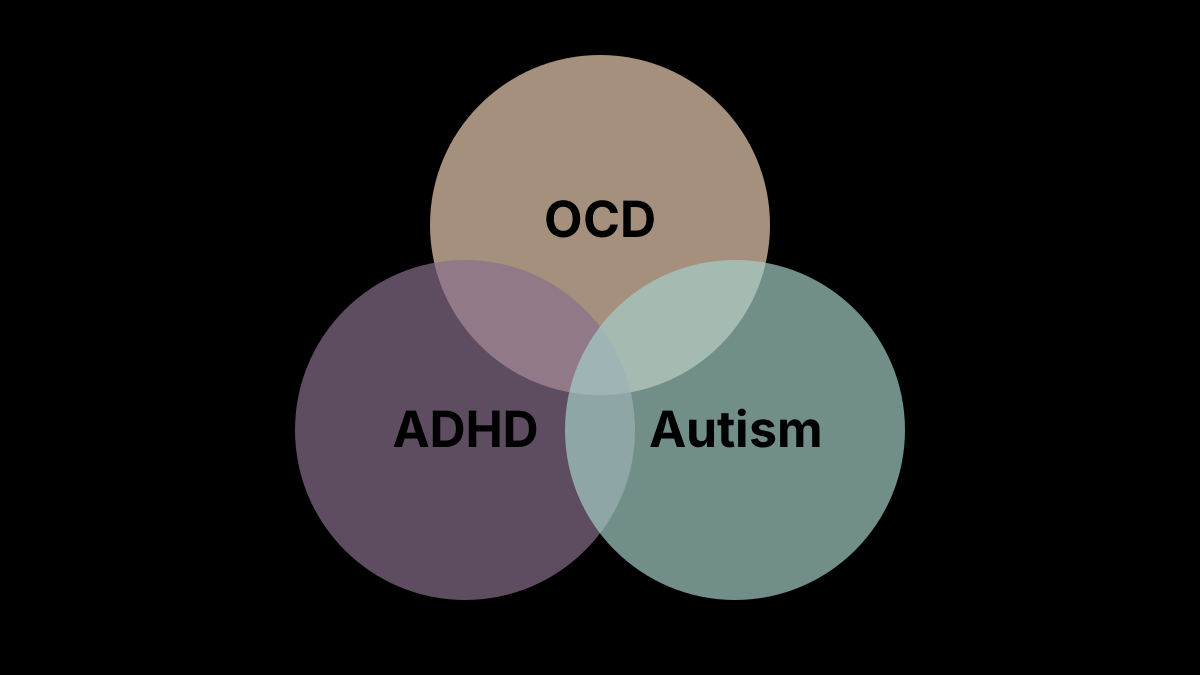
When OCD appears alongside signs of ADHD or autism, the picture can become unclear. This article explains differences, overlap and signs that something more than OCD may be involved.

OCD specialist · Clinical psychologist
Many people have played by OCD’s rules for far too long. The aim is not to defend against OCD more effectively, but to change the game and go on the offensive.

OCD specialist · Clinical psychologist
An international study shows that unwanted intrusive thoughts occur across cultures. This research news item separates the study findings from the OCD specialist’s clinical perspective.

OCD specialist · Clinical psychologist
OCD around childbirth can involve frightening, unwanted thoughts. This article explains why the distress is often misunderstood or remains hidden.

OCD specialist · Clinical psychologist
What is interesting about OCD, overthinking and social anxiety is not simply that they often occur together. They can share the same underlying mechanism: an attempt to achieve certainty through thought, analysis and control.

OCD specialist · Clinical psychologist
Acceptance in OCD treatment is not about accepting what an obsession says. It is about meeting the thought in a way that stops OCD from deciding what happens next.

OCD specialist · Clinical psychologist
What matters is not how uncomfortable an exposure can be made, but whether it is carefully targeted and helps break the OCD cycle rather than becoming part of it.